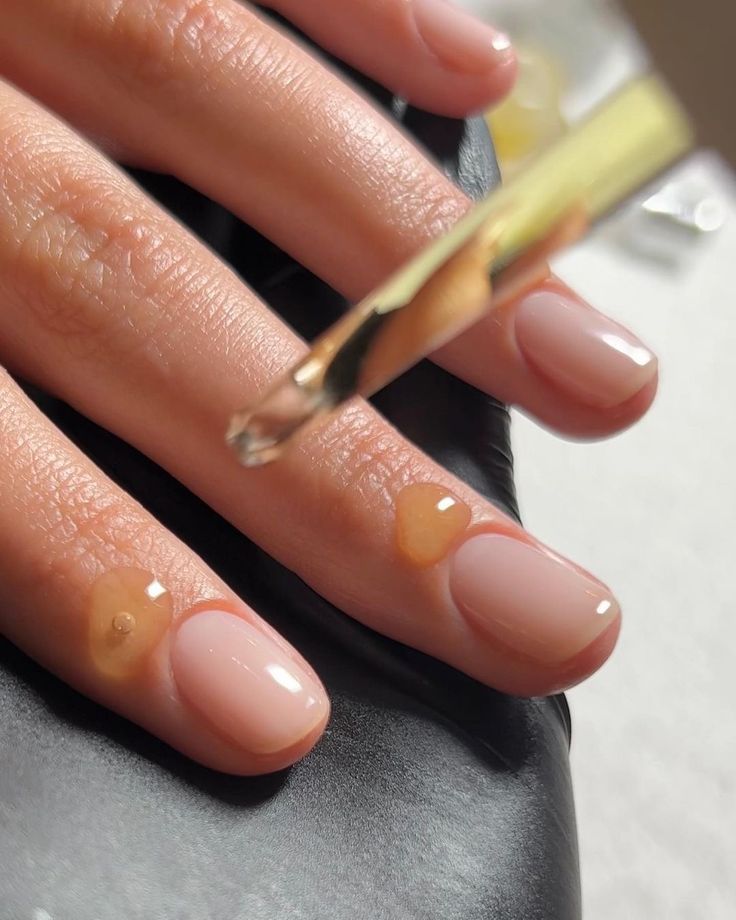
Hey all, I’m pretty sure I’ve got keratin granulations after keeping polish on my nails nonstop for about six months, and the advice out there is all over the place so I could use some help.
My biggest confusion is whether to leave them completely bare to grow out, or keep something protective on top since water exposure seems to make it worse. Not sure if a sheer treatment like Nailtiques counts as “polish” here.
I’m also torn on removers. Pure acetone works fast without scrubbing but everyone warns it’s drying, and the gentle ones seem watered down rather than actually kinder to the nail. Is very light buffing ever okay to smooth the surface, or will that make the granulations worse?
You don’t have to leave them bare. I wouldn’t go straight into another long manicure.
A thin clear base coat or a sheer treatment like Nailtiques gives some water protection, as long as you remove and refresh it regularly instead of piling on coats.
If the areas are yellow, thick, crumbly, painful, lifting, or spreading on one nail, see a dermatologist.
Don’t buff the white away. Buffing removes nail plate along with the roughness, so you end up with thinner nails that are even more water-sensitive.
Acetone is fine. Hold a saturated pad on the nail for a bit, wipe once or twice, and stop rather than rubbing for ages. The Best Nail Polish Remover? Follow with cuticle oil or plain moisturizer.
Keratin granulations are the dried-out top layer of the nail plate bunching into rough white spots after polish stays on for months. After my own nonstop stretch the chalky look hung around closer to two months than two weeks.
Skip the buffer, even a light one. I did one pass and it looked smoother until my hands got wet, then those thinned spots soaked up the water and came back whiter and rougher.
Same reason the ‘sensitive’ removers drove me nuts. They’re watered down, so moisture sits on the nail while you wait. Blot everything dry right after the old polish comes off and keep showers short.
Keratin granulations grow out on their own as the nail rehydrates.
After a similar six-month polish run, I went bare, jojoba or cuticle oil rubbed in twice a day. Something like Nailtiques is fine since the problem was the long wear plus dryness. Don’t leave even a treatment coat on for weeks at a time.
On removers, I’d pick pure acetone over the gentle ones. It’s off the nail in seconds instead of soaking and scrubbing for two minutes, so it dries them out less overall. Oil right after though, within a minute.
Skip the buffing, or keep it to one light pass with a fine grit. The granulations are already thinned spots, so sanding them down removes more of the layers you’re trying to rebuild.
Gloves for dishes made a bigger difference than I expected. Six to eight weeks of oil and you should see clear nail coming in at the base.
When I refresh, I take the whole old layer off first instead of patching worn spots. One thin coat worked better for me, and I’d redo it every few days. I treated it as a partial barrier.
I did ‘one light pass’ thinking I was being careful. I washed dishes and the spots came back looking almost frosted, worse than before. What you said about the thinned areas soaking up water makes sense, since the nails I buffed stayed rough way longer than the ones I left alone. Did the buffed spots on yours take longer to grow out than the untouched ones, or did everything even out around the same time? The two months vs two weeks timeline is a relief to hear.
Leaving everything alone now. I noticed that frosted-after-dishes look too, and it’s what convinced me even light buffing was too much. On mine the buffed spots stayed obvious for a few extra weeks.
Keep a thin coat on. Bare nails soak up water way more easily, which makes everything worse. The polish gives them a bit of a shield while the damage grows out.
Nail strengthener could help while they grow out. It gives some protection without being a full polish situation. I’d take it off and reapply every few days though, instead of letting it sit there for weeks.
I’m in the same boat with weak keratin bonds, where the polish sticks to the nail better than the nail layers stick to each other.
I’ve given up trying to fully prevent it. Now I keep polish on back to back and enjoy my nails instead of stressing.
Jojoba oil helps a lot. Weekly hot oil treatments too. I wouldn’t touch a buffer, because you’re thinning out what’s already compromised. Hardeners can tighten those bonds somewhat, though they’re not a magic fix.
I wear gloves for anything wet and never use my nails as tools.
Light filing is what I do for those rough patches, just enough to smooth them out. Don’t go overboard though, since the nail’s already compromised and thinning it more will only make things worse.
I had this after a long run of dark reds and glitters. Every Sunday I took a quick photo in the same lighting. After about 3 weeks I could see the chalky areas moving toward the free edge.
When I used a hardener too often my nails got stiff and started corner-cracking instead of looking dry. If yours are rough and not floppy, I’d lean more toward a flexible clear base. Keep the layers thin without making a little plastic shell on top.