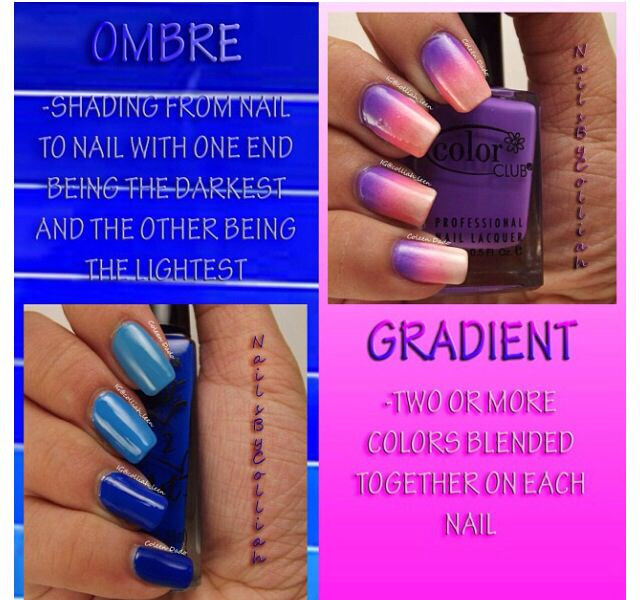
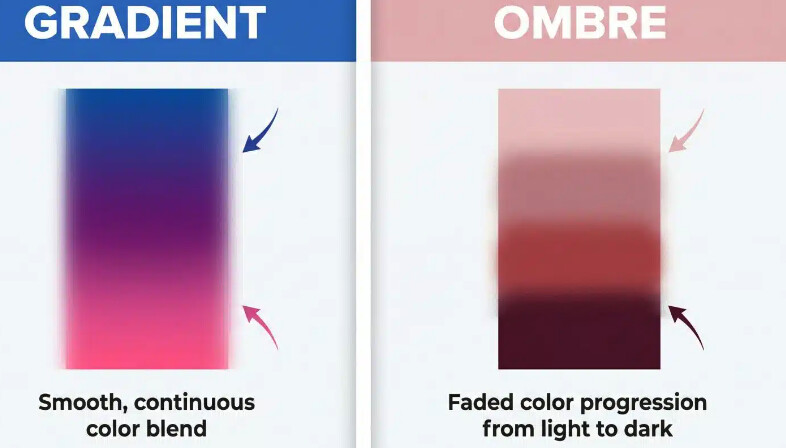
From what I’ve seen in nail pics, a gradient blends two different colors together, like pink fading into blue or red to black. Ombre stays in one color family, like light blue into navy or soft grey to charcoal.
There’s also this overlap where people call it an “ombre gradient” which is a smooth blend using shades from the same family. I think that’s what most mean when they say ombre, but I guess technically it’s the… combo?
Am I getting this right or mixing up the terms? If someone knows nails better, I’d appreciate the correction so I can ask for the right thing at my next appointment.
Ombre comes from the French word for “shaded,” so the strict definition is one color moving light to dark. Gradient is the broader term for any smooth switch, so two different colors blending still counts. Ombre is always a type of gradient, but not every gradient is an ombre.
A lot of techs will say ombre for any fade, pink to blue included. The most requested version, nude melting into white, gets called “French ombre” or “baby boomer” even though that’s two different colors, not one family.
“Gradient” tends to live over on the DIY and nail art side. That “ombre gradient” phrasing you noticed is mostly hedging. They know the terms are mush. Some people use gradient to mean the shade shifts across your fingers, so each nail is slightly different from pinky to thumb, while ombre means the fade happens on each individual nail. I’ve been served the wrong one exactly once. My own fault for assuming we were speaking the same language.
Just tell them the product and the colors and show a photo/
‘Ombre gradient’ is just loose wording for a smooth fade. I wouldn’t treat ‘same color family’ as some firm salon definition either, there’s no universal rule on that. So say something like ‘a two-color fade in gel polish’ or whatever you actually wear. Then name the exact colors and how blended you want the middle, soft and melty or a tighter switch. People forget to mention that part.
A tech might hear ‘blue ombre’ and picture five solid shades going pale to dark across the hand. Someone else pictures each nail fading from cuticle to tip. Same word, two pretty different sets, so ‘one color family’ doesn’t really narrow it down.
At the appointment, I’d tell them where the change happens, like cuticle to tip or across the fingers. I’d also say whether every nail needs both colors and whether you want a soft blend or a visible midpoint. A reference photo still works best since salons use these terms so differently. ‘I want this placement but with these two colors’ usually gets you closer than giving a rough explanation.
A picture says a thousand words, just show them what you like.
The dictionary definitions are clean, sure, but nobody at a salon is checking a dictionary before they pick up the brush. If the single most popular ‘ombre’ out there is technically two different colors, the strict definition died a long time ago.
Yes, that’s how I’d frame it. Gradient covers any smooth blend between colors, any colors. Ombre is the subset where they share a family. One inside the other.
People don’t seem to use these terms correctly anymore. Someone posts ‘ombre nails’ and it’s actually a gradient, while real gradients get labeled ombre just as often.
Maybe we should treat the words as interchangeable in the nail community now.
Worth asking how they’ll do the fade. Sponged-on regular polish usually looks a little grainy up close, while gel blended with a brush comes out smoother.
Some salons charge fades as nail art instead of a color service, so check the price before you sit down.
Hair stylists use ombre dark at the roots fading to light at the tips, so the confusion makes sense when nail people start throwing in extra rules about color families. My friend learned the hair definition in cosmetology school, any fade from one shade to another (see this).