Okay so is nail dehydrator the same as acetone or is there actually a difference?
I’ve been using straight acetone and rubbing alcohol as a prep step before painting for like ever and my nails are paying the price. They’re peely and thin rn I got obsessed with redoing my mani whenever it wasn’t perfect (multiple soak-offs in one afternoon oops) and now I’m dealing with all that damage growing out.
I’ve cut way back on the acetone soaks but I still want my polish to last more than a couple days before it starts lifting at the edges. Someone told me a proper nail dehydrator is gentler than just splashing acetone on there but I can’t tell if that’s true or if it’s basically the same thing in a cuter bottle. Do the actual dehydrator products have something different in them that’s less harsh on already damaged nails? Or is any kind of drying out step gonna keep messing up my nail health regardless of what it’s called?
Would love to hear what you use for longer wear without wrecking your natural nails even more.
They do a similar job, they’re different products. Straight acetone is a solvent that strips everything off the nail (oils and moisture) and it’s pretty aggressive. A nail dehydrator is usually a blend of isopropyl alcohol and ethyl acetate, made to flash off surface oils and moisture fast without soaking into the nail plate the way acetone does.
The bigger issue for your nails sounds like the repeated soak-offs. I went through the same “it’s not perfect, rip it all off” phase and paid for it for months.
My wear time got noticeably better once I switched from the acetone-then-alcohol routine to a proper dehydrator. How Do You Dehydrate Nails?
Keep the dehydrator on the nail plate and off the skin, and use a base coat made for peely nails. Cuticle oil helps a lot too, not right before you paint.
The dehydrating step itself is fine unless you’re doing it five times a day. It took a couple months for my thin spots to grow out.
No, not automatically the same thing. ‘Dehydrator’ covers a bunch of different formulas. Some are alcohol based, some ethyl acetate, some acetone, or a mix. None of them improves nail health, and ‘gentle’ on the label can still be too drying for peeling nails.
For regular polish I’d skip the dehydrator while the damage grows out. Wash your hands, let the nails dry completely, do one light alcohol wipe, then a good base coat.
Gel is different. Use only the prep that specific system requires. If the nail plate is thin, take a break from gel entirely.
What usually keeps the damage going is the cycle of buffing the peeling areas and then doing another soak-off. Oil your nails and cuticles after the manicure and between changes.
Dehydrator and acetone aren’t the same. Acetone’s for removal.
When my nails got peely, the dehydrator didn’t help with the lifting at the edges. Alcohol wipes didn’t either, since the polish was sticking to a loose layer of nail.
Now I clip off the loose part and leave it. Buffing made the thin spots worse. Between manis I oil the bare nail, then use a flexible base and cap the free edge.
One caveat: some dehydrators contain acetone, and the better wear time might come from that formula pairing well with your base coat. Repeated soak-offs are the much bigger issue though. Keeping dehydrator off the skin and letting the thin spots grow out are both good calls.
No prep product fixes lifting when the nail surface itself is detaching. I kept blaming my base coat when the problem was a peely top layer.
Clip-and-leave is what finally worked for me too. Sharp nippers matter, since dull clippers can tug and start a new split right next to the one you removed.
Do the clipped areas grow out okay under polish for you, or do you leave those nails bare until the thin spot moves past the free edge?
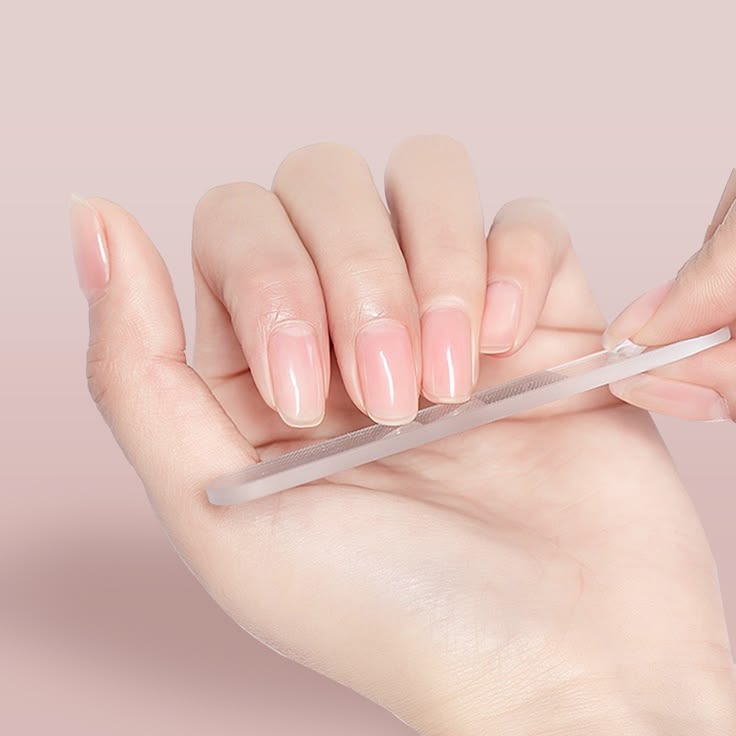
Even sharp nippers work by squeezing two blades together, and on nails that are already splitting into layers that pressure can crush the edge and push the separation further back. I’ve had better luck trimming the nail short with regular clippers and then filing the edge with a glass or crystal file, going in one direction only. A fine glass file seals the layers together instead of leaving a raw edge for the next split to start from.
I polish over the clipped spots rather than leaving them bare. Removal is what usually undoes my progress. Scrubbing back and forth with a remover pad reopens the layers I filed smooth. Pressing a soaked pad on the nail for several seconds and then wiping once toward the tip has made a noticeable difference.
Dish soap as nail prep instead of acetone. I switched after acetone kept wrecking my nails, no matter how much I oiled and hydrated. I’m wondering if I just got lucky or if this works for other people too.
What’s your base coat situation (and top coat, for that matter)? I went through something similar where polish wouldn’t stick past day two, and I was so convinced the prep step was the problem. Turns out dehydrating wasn’t doing anything for me.
I grab rubbing alcohol (75-90%, whatever’s around) instead of a dedicated dehydrator, and it works fine for prep. Less harsh than straight acetone but still gets the oils off so polish sticks better.
My guess is the soak-offs did most of the damage, and the prep step only added a little.
A dehydrator isn’t that different from acetone though. Isopropyl alcohol and ethyl acetate are still solvents. A quick swipe evaporates fast and your nails bounce back quicker. But a soak-off keeps the solvent on there for ten minutes.
I switched to a non-acetone remover and stopped scrubbing. Press a soaked cotton pad on the nail for a few seconds and slide it off.
Thinner coats helped my polish last longer. Thick layers shrink and pull away from the edges as they cure, especially on flexible nails.
Check the ingredient list for methacrylic acid. That’s how you tell if a primer is acid-based.
Acid primers chemically etch the nail plate and dehydrate, so you can skip a separate dehydrator step with those. Non-acid primers work more like double-sided tape between your nail and the product, so dehydrate first with those.
With how thin your nails are though, I’d be careful with anything that etches the surface.
I’ve been washing my hands with soap and water and calling it done. Is that actually enough, or am I getting lucky?
I switched to a polish remover pot at the sink so I can rinse each finger right after removal instead of letting the acetone sit. Then lotion or oil once all ten are done.
I change my nails 3-4 times a week and they’re fine, because I use softened acetone for removal and always follow up with a strengthening base coat. The dehydrator step (rubbing alcohol or pure acetone, whatever) matters way less than how you protect and moisturize the nail after.
With the damage you’re dealing with, you probably don’t need a dedicated dehydrator right now if you’re sticking with regular polish while your nails recover, since alcohol can do the job without adding another drying product to the mix.
The product names get so confusing, there are like a million different prep steps depending on what system you’re using. Dehydrator is meant to prep the nail surface before primer, not replace your whole routine.
The bigger win would be figuring out which prep steps are required for your polish type versus which ones you can skip while those peely layers grow out.
Skip the buffing. Focus on the degreasing step instead. Roughing up the nail plate is what causes the thin, brittle damage you’re dealing with.
Getting the oils off completely is what matters. Acetone is the best dehydrator for that. If you swap in alcohol, it has to be 99% isopropyl. The 70% stuff has water in it that’ll mess with adhesion.
Use both. They help with retention, in different ways. The dehydrator pulls oil and moisture off the nail plate and then evaporates. Primer is the first real layer that helps your natural nail grip whatever product you’re using.
I get way better results with the nail brand’s own dehydrator than with plain alcohol or acetone.